How We Use Games, Connection, and Collaboration to Make Learning Stick
Here at Splat Training, we do things a little differently. Yes, we teach first aid. Yes, we take it seriously (it is life-saving stuff, after all). But we also believe that learning should feel like something you want to do, not something you endure because there’s biscuits!
That’s why we live and breathe our motto: Serious Skills, Taught Playfully.


Play works!
We’re not just being daft for the sake of it (well… not always).
There’s a heap of research behind our playful approach.
In Training from the Back of the Room, Sharon L. Bowman explains that adults learn best when they’re actively involved, not passively listening. The key ingredients? Movement, talking, interaction, emotion, and yes, a good bit of fun.
Meanwhile, Playful Learning by Nicola Whitton and Alex Moseley shows how play helps adults feel safe to take risks, collaborate with others, and try things out in a hands-on way. It creates space for curiosity and confidence-building, both of which are pretty vital when you’re learning how to respond in a real emergency.
What playful learning looks like at splat
So what does this actually look like in a Splat session?
Let’s break it down:
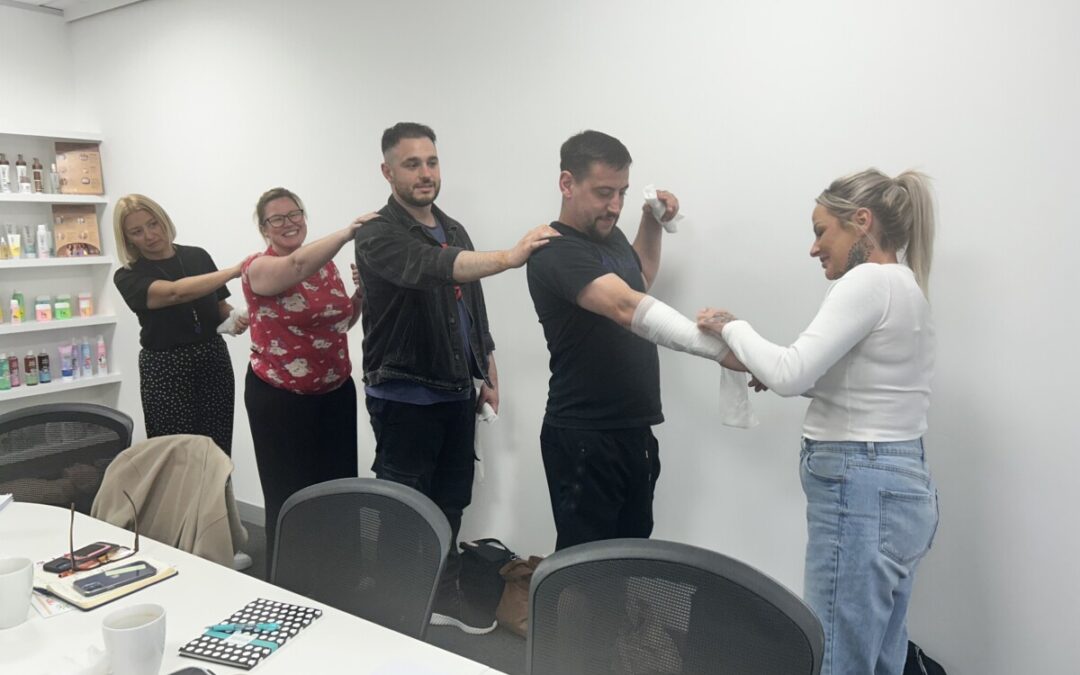
- Games that build practice: We do activities that feel like games but help you practise vital skills—like spotting danger, assessing situations, and responding under pressure.
- Collaboration over competition: While some games have a fun element of challenge, we always emphasise teamwork. First aid is rarely a solo act in real life, it takes calm heads working together.
- Connection through play: Games are a shortcut to connection. You loosen up, you chat, you laugh. You’re learning alongside new friends not strangers, and learning feels less uneasy.
- Tactile tools: Whether it’s a set of quirky role-play cards, a board game-style progress tracker, or foam dice that determine your next scenario, we believe learning is more memorable when you can touch it, not just talk about it.


Practice makes confident
We don’t believe in death by PowerPoint. We believe in trying things out; over and over, until they feel second nature.
That’s where games shine. They allow for:
- Safe mistakes (get something wrong? Great, we’ll try again together)
- Immediate feedback
- Realistic, repeatable scenarios
Because when it comes to saving a life, confidence comes from practice, not just knowledge.
What our learners say
We’ve had learners who walked in expecting a dry, serious course… and walked out saying:
- “It didn’t feel like training. It felt like playing—but I actually remember it all.”
- “I didn’t just sit there—I did stuff. I feel so much more confident now.”
- “I thought games would be a bit silly, but it actually made everything click.”
That’s the power of play. It doesn’t just teach—it transforms.
Why adults deserve to play
We all learn differently. But one thing’s clear: learning sticks when it’s social, active, and fun. As three trainers with backgrounds working with children, we’ve seen how play builds understanding, memory, and resilience. We believe adults deserve that too.
Because the stakes are high, but your learning doesn’t have to be stiff.
We’re Splat Training.
We teach life-saving skills with a smile, a spark, and a splash of silliness—because play is powerful.
And life’s too short for boring training.
Serious skills taught playfully!